ThoughtSpot Alternatives: What Each AI Data Analyst Needs Before the First Answer
ThoughtSpot, Hex, Deepnote, Basedash and Querio compared on the data they need, who sets them up and their listed prices, checked on 27 October 2026.
- AI
- Business Intelligence
- Product Comparison
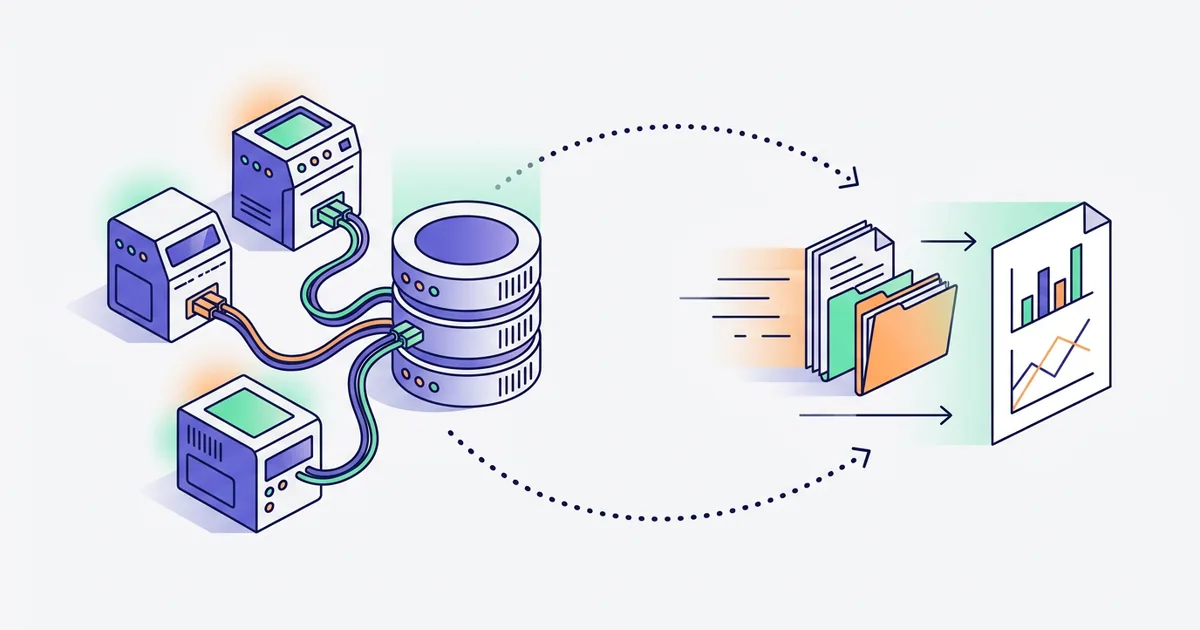
AI data analysts promise answers to questions asked in plain English. Before the first answer, most of them need your data in a database or a warehouse, someone with the rights to connect it, and a budget sized for a data team. This page compares ThoughtSpot, Hex, Deepnote, Basedash and Querio on those three points. The prices come from each vendor's pricing page, checked on 27 October 2026. Prices change, so check the vendor's page before you buy.
What does each AI data analyst need before the first answer?
Most need a connection to a database or a cloud warehouse. Hex also takes uploaded CSV files. Three have a free plan, and paid plans run from $25 per user to $2,099 a month.
| Tool | Starts from | Listed price | Fits |
|---|---|---|---|
| ThoughtSpot | Live connections to data platforms such as Snowflake, Databricks and Redshift | Essentials from $25 per user per month, billed yearly, 5 to 50 users. Pro from $50 per user per month | Organizations rolling out self-service analytics on a warehouse |
| Hex | SQL and Python notebooks on a database or warehouse, plus uploaded CSV files | Community free. Professional $36 and Team $75 per editor per month | Data teams who write SQL or Python |
| Deepnote | Notebooks. The free plan connects to Postgres, MySQL, ClickHouse and Google Drive | Free for up to 3 editors. Team $39 per editor per month, billed yearly | Analysts and data scientists |
| Basedash | A direct connection to a database or warehouse, or SaaS data synced into its own warehouse | Startup $1,000 per month plus AI usage, up to 25 users | Startups with a production database |
| Querio | Read-only connections to warehouses such as Snowflake, BigQuery and Postgres | Free plan. Core $2,099 per month, billed $25,000 a year | Teams with a warehouse who want an AI analyst for everyone |
What is ThoughtSpot's AI analyst for?
ThoughtSpot puts search and AI agents on top of data already in a cloud platform. Its pricing page lists live connections to Snowflake, Databricks and Redshift, and prices each plan by user and by rows of data ThoughtSpot pricing.
Essentials starts at $25 per user per month, billed yearly, for 5 to 50 users and up to 25 million rows. So the smallest team pays at least $125 a month. The AI agents, called Spotter, appear on the Pro plan from $50 per user per month, with 25 queries per user each month. Enterprise is priced on request.
It fits an organization whose data already sits in a warehouse and that wants analytics for many users.
How do Hex and Deepnote use AI?
Both are notebooks with an AI agent inside. You write SQL or Python in cells, and the agent writes and edits them with you. They suit people who already write queries. The agent speeds them up, and the work stays in the notebook.
Hex connects to warehouses and databases such as Snowflake, BigQuery, Postgres and Redshift. Only Admins create workspace connections. Editors create them inside a project Hex docs. You can also upload CSV files to a project, up to 100 files under 2 GB each, and query them from a SQL cell Hex docs. The Notebook agent needs an Admin, Manager or Editor role Hex docs. Plans run from free to $75 per editor per month Hex pricing.
Deepnote's free plan covers up to 3 editors and 5 projects. It connects to Postgres, MySQL, ClickHouse, MariaDB and Google Drive, with 5 agent calls a month. The Team plan, $39 per editor per month billed yearly, adds BigQuery, Snowflake, Redshift and Databricks, plus $39 of AI credits each month Deepnote pricing.
How do Basedash and Querio work?
Both put an AI analyst on top of your database. You connect a database or warehouse once, and the team asks questions in plain English. Their prices assume an organization that already runs a data stack.
Basedash connects directly to a database or warehouse such as Postgres, Snowflake or BigQuery and queries it in place. For SaaS tools, it syncs their data into Basedash Warehouse Basedash docs. The Startup plan costs $1,000 a month plus AI usage, for up to 25 users, after a 14-day trial without a card Basedash pricing.
Querio links to a warehouse through read-only, encrypted credentials and names Snowflake, BigQuery and Postgres Querio. It has a free plan, and Core costs $2,099 a month, billed $25,000 a year, with a four-week pilot Querio pricing.
When does a file-first tool fit better?
When your data lives in exports, not in a warehouse. Many small teams run on a billing tool, a CRM and a spreadsheet. Nobody manages a database, and the monthly report starts from CSV downloads.
For that team, a warehouse comes before any of the tools above, and a warehouse is a project of its own. A file-first tool skips that step: it starts from the exports you already download. The trade-off is real. A warehouse keeps history in one place and refreshes on its own, while files have to be uploaded again each month.
If you already run a warehouse and have a data team, ThoughtSpot, Hex or Querio fit better than a file tool. For the trade-offs with classic BI, read Power BI vs an AI reporting tool. For the basics, read what business intelligence is.
Where does Glow Reports fit?
Glow Reports starts from files. You upload one or several CSV or Excel files and ask for the report in plain language. The AI writes the SQL, builds the charts and drafts the text. You don't need a warehouse, a data team or a semantic model first.
The SQL sits under each figure, so you can read how a number was counted and edit the query when a definition is wrong. The report exports to PDF and stays in your workspace. The free plan gives 300 credits once, and a report costs 100 credits. When your data lives in other tools, our team sets up the connection on request.
Common questions
Which AI data analyst has a free plan?
Hex Community, Deepnote Free and Querio Free, according to their pricing pages on 27 October 2026. ThoughtSpot Essentials starts at $25 per user per month for at least 5 users.
Do I need a data warehouse to use AI for analytics?
For most of the tools on this page, yes, or at least a database. Hex also queries uploaded CSV files, and file-first tools start from exports.
Can these tools show how a number was computed?
The notebooks do by design, since every cell holds the query or the code. For the others, check how each one shows its query before you trust a figure in a board report.
Do I need SQL to use Glow Reports?
No. The AI writes the SQL. You can read it under each figure when you want to check how a number was counted.
I am a product engineer and the founder of Glow Reports. I spent more than 6 years building products in tech, data and cybersecurity, for large groups, startups and SMEs. In most organizations I saw data treated as a technical topic, when it drives business decisions. I built the reporting tool I was looking for, so the people who run small and mid-sized organizations can read their own numbers without a data team.
More from El Mehdi BenaneUpload your CSV or Excel exports to Glow Reports and get a report with the SQL behind each figure.